
.jpg)
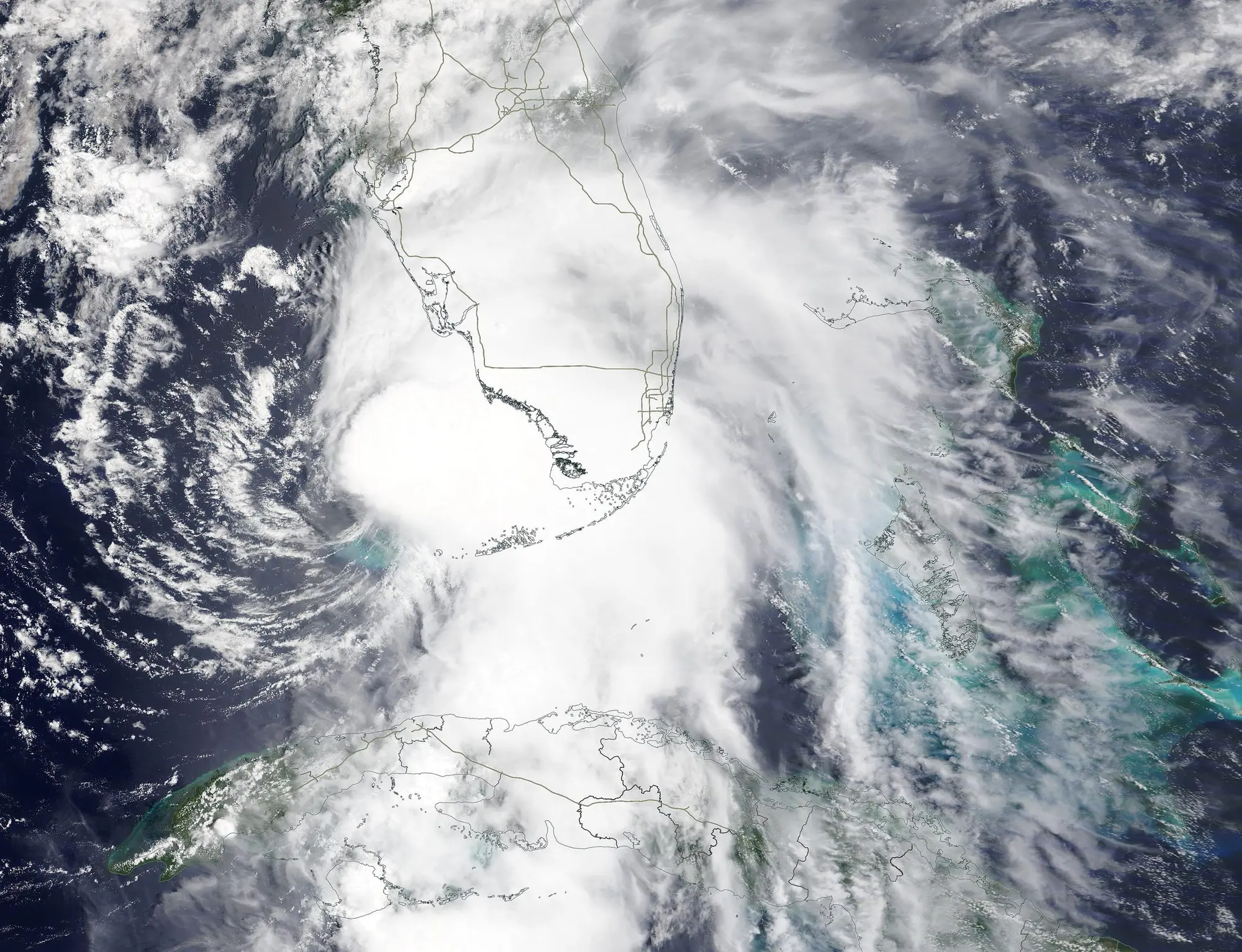
Half of Key West’s calendar is inside hurricane season, which is a poor reason to write off half the year. Here is the actual record, and then the only booking decision that matters.
The season
“The Atlantic hurricane season runs from June 1 to November 30.”
“The peak of the Atlantic hurricane season is September 10, with most activity occurring between mid-August and mid-October.”
And the average, on 1991–2020 normals:
“average Atlantic hurricane season has 14 named storms, 7 hurricanes, and 3 major hurricanes”
Those are Atlantic-basin numbers. Almost none of them come near the Keys.
The number that actually answers the question
Monroe County publishes its evacuation history. Across 21 documented seasons, 1995 to 2015:
| Evacuations | Seasons |
|---|---|
| None | 1996, 1997, 2000, 2002, 2003, 2007, 2009, 2010, 2011, 2013, 2014, 2015 |
| One | 1995, 1998, 1999, 2001, 2006, 2012 |
| Two | 2008 |
| Three | 2005 |
| Four | 2004 |
Fifteen evacuation orders across 21 seasons — and twelve of those 21 seasons had none at all. Seven of the fifteen fell in the two consecutive seasons of 2004 and 2005.
So the honest framing is not “one in every season.” It is that most seasons pass with nothing, and the bad years are genuinely bad and cluster.
The caveat: the county’s published list stops at 2015. Irma in 2017 is published as two separate orders rather than in the summary, and the seasons since are not in it. The arithmetic above is 21 well-documented seasons, not the last thirty.
Visitors go first
This is the part that matters most to you and the part most commonly reported wrong.
The county issues separate orders for visitors. From its own historical record:
“Hurricane ERIN — Non Residents Evacuation” “Hurricane IRENE — Oct. 16/99 – Mandatory Evacuation of Non-residents & Visitors” “Hurricane FRANCIS – Sep 1, 2004 – Mandatory Evacuation for Visitors” “Hurricane ERNESTO – Aug 27, 2006 – Mandatory Evacuation Non-Residents & Visitors” “Tropical Storm FAY – Aug 16, 2008 – Aug 19, 2008 – Evacuation of Non-residents & Visitors”
And it still keeps them separate — its index lists “2017 Hurricane Irma Mandatory Evacuation for Residents of Monroe County” and “2017 Hurricane Irma Mandatory Evacuation for Visitors and Non-Residents of Monroe County” side by side.
In every documented case where visitors were named separately, they were ordered out first or alone.
And it is written down. The Florida Keys Hurricane Evacuation Clearance Time memorandum of understanding — signed by the state, Monroe County and the Keys cities, and adopted by the City of Key West in Resolution No. 06–244 — sets the order:
“Approximately 48 hours in advance of tropical storm winds, a mandatory evacuation of non residents, visitors, recreational vehicles (RV’s), travel trailers, live-aboards (transient and non transient), and military personnel from the Keys shall be initiated. State parks and campgrounds should be closed at this time or sooner and entry into the Florida Keys by non-residents should be strictly limited.”
“Approximately 30 hours in advance of tropical storm winds, a mandatory phased evacuation of permanent residents by evacuation zone (described below) shall be initiated.”
So the version you will read everywhere, “visitors leave 48 hours before residents”, is not quite it. Visitors go about 48 hours before the tropical-storm winds arrive, and residents about 30 — an 18-hour head start, not two days. The practical meaning is the same: a visitor’s trip ends two days before the weather does, and so does any day at Fort Zachary Taylor or Bahia Honda, because the plan closes the state parks at that point or sooner.
Key West is Zone 1
“Monroe County’s comprehensive emergency plan calls for a ‘Phased Evacuation.’ This evacuation plan is intended to avoid unnecessary evacuation if some zones are expected to be affected and others are not.”
“Zone 1: MM 0 to MM 6” · “Zone 2: MM 6 to MM 40”
Key West is mile marker 0. First zone, first out.
Which combines badly with the geography — there is one road out, two lanes, and forty-odd bridges. The county’s own instructions follow directly from that:
“Fill your car with gas as soon as you can; stations run out of gas and/or stations close because their employees evacuate”
“Do not get stranded, evacuate early if possible”
Even the parking garage shuts: “Parking is available 24 hours, except during evacuations.”
Where to look during a storm
“The Monroe County Tourist Development Council (TDC) has a formal communications program that is tightly coordinated with Monroe County Emergency Management to provide crucial information to help visitors safely exit the Florida Keys in the event of a hurricane threatening the region.”
Not social media, not your hotel’s front desk, not us. Monroe County Emergency Management is the source, and the visitor messaging is a deliberate function rather than an afterthought.
The booking decision
Here is the practical part, and it is about terms rather than dates.
The cancellable things. The two sunset sails and the reef trip below all carry “Free cancellation up to 24 hours before departure.” Book those early and freely. In hurricane season a free 24-hour cancellation is worth real money, and it costs you nothing to hold a good boat on a good evening.
The non-refundable thing. The Viator listing we link for the Dry Tortugas ferry is “Non-refundable. Cannot be changed for any reason.” That is the one to be careful with — and the ferry does not run on 22 or 23 October 2026, which the Dry Tortugas page lists with its other dark days.
The advice on the Dry Tortugas page holds here too: book the date you are sure of, and book it for day one or two of your trip rather than your last morning. If weather takes a day, you want a spare one behind it.
And note the counterweight, which is that the ferry is far more reliable than the doom-laden framing suggests — it does not cancel for rain, only for sea state.
Should you go in September?
Yes, with the above. The rates are lower, the island is quieter, and the documented base rate is that most seasons produce no evacuation at all.
What you should not do is book a non-refundable, once-in-a-trip excursion for the last morning of a September trip. That is the specific mistake, and it is avoidable without giving up the season. For the rest of the calendar, the month-by-month page has the weather, the water and the dated events.
.jpg)
.jpg)
